
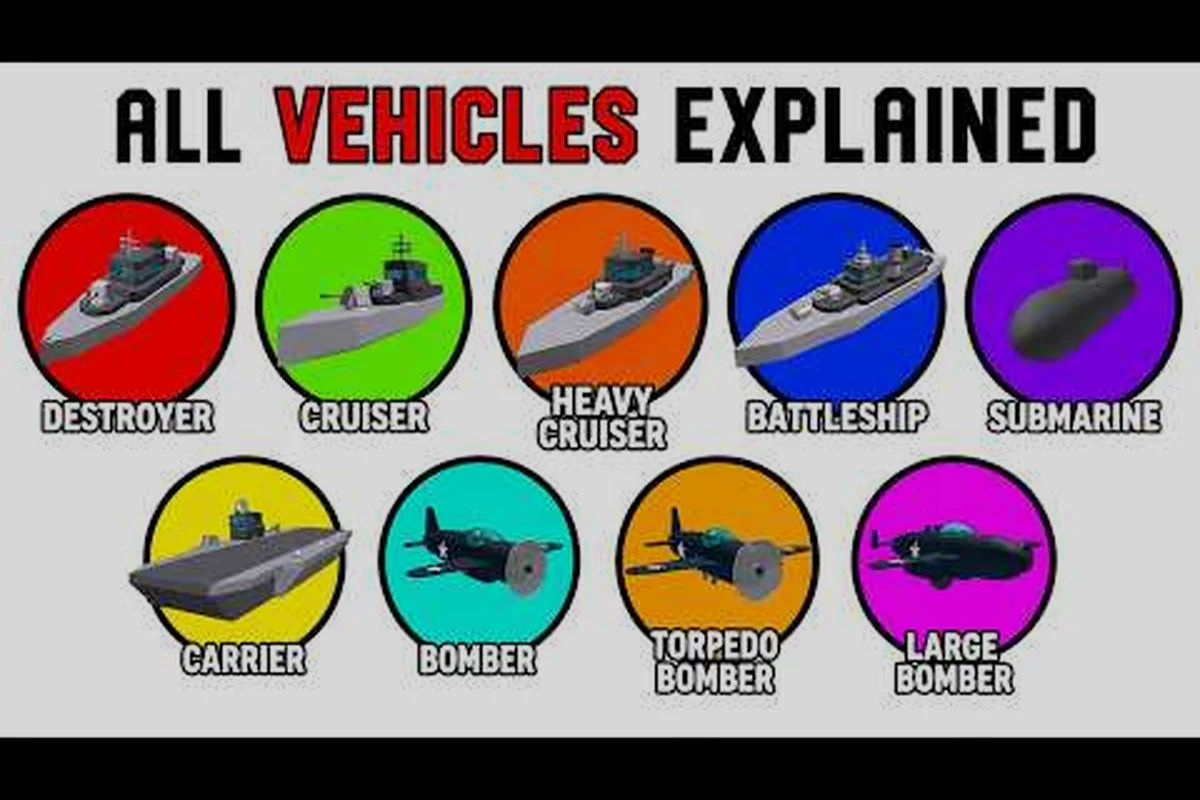
Picking the wrong hull in a fleet battle is the single fastest way to lose your resources in Navy War, because every ship class trades a different combination of HP, speed, armor, and firepower that completely changes how a PvP engagement unfolds. This Navy War ship stats comparison breaks down all five playable classes — battleship, cruiser, destroyer, submarine, and aircraft carrier — with verified stat ranges and practical fleet-building guidance so you stop guessing and start building a roster that actually wins trades. The numbers below are pulled from the official Navy War on Roblox listing and cross-referenced with community-reported loadouts as of early September 2026.
Battleship, Cruiser, Destroyer, Submarine & Carrier Class Overview
Navy War divides its naval roster into five core hull classes, and each one occupies a distinct role in fleet composition. Battleships are the slowest but hardest-hitting capital ships, cruisers sit in the middle as flexible all-rounders, destroyers trade armor for speed and torpedo alpha, submarines are stealth ambush predators, and aircraft carriers project power through launched air wings rather than their own main guns. Understanding how these roles interact is the foundation of any useful Navy War ship comparison guide.
| Class | Primary Role | Tier Tier Role | Best For |
|---|---|---|---|
| Battleship | Capital brawler / frontline tank | T1-T2 | Absorbing fire, controlling chokepoints |
| Cruiser | Mid-range skirmisher / support | T1-T2 | Flex picks, mixed fleets, escort duty |
| Destroyer | Fast flanker / torpedo boat | T1-T2 | Hit-and-run, cap interception, scouting |
| Submarine | Stealth striker / area denial | T1-T2 | Surprise volleys, zoning open water |
| Aircraft Carrier | Air-power projection / zone control | T1-T2 | Late-game fleet anchors, anti-structure |
Every class follows the same upgrade curve — base stats scale with tier, and tier-2 variants gain roughly 15-25% more HP and firepower than tier-1 equivalents according to community testing. Higher tiers also unlock module slots, which is where the real stat deltas start to compound.
Battleship Stats and When to Field One
The battleship is the heavyweight anchor of any fleet in Navy War, and it is the natural starting point for a Navy War battleship gameplay guide because its stat profile is the easiest to read. Battleships stack raw HP and armor at the cost of top-end speed, which means they win long brawls but lose the race to every objective outside their firing arc.
Battleship Stat Block
| Attribute | Tier-1 Range | Tier-2 Range | Role Notes |
|---|---|---|---|
| HP (Hull Integrity) | 4,500-5,200 | 5,800-6,500 | Highest in class, survives focused fire |
| Top Speed | 18-22 knots | 20-24 knots | Slowest hull in the game |
| Armor Rating | Heavy (85% dmg reduction tier) | Heavy (90% dmg reduction tier) | Eats cruiser shells for breakfast |
| Main Gun Firepower | 320-380 dmg/salvo | 410-480 dmg/salvo | Devastating broadsides at mid range |
| Secondary Range | 18-22 cells | 20-25 cells | Out-ranged only by carriers |
| Detection Radius | 14-16 cells | 14-16 cells | Easy to spot, hard to hide |
The HP and armor pairing is what makes battleships feel like floating bunkers, and it is the reason most early-game fleets run at least one battleship as a frontline sponge. According to community data, a tier-2 battleship can absorb roughly two full destroyer torpedo volleys before critical damage, which means even a kited battleship pulls enormous threat value out of a fight.
The tradeoff is real, though: a battleship caught without escort support in open water is a free kill for any submarine commander who can line up a stern shot. Build battleships when you are ready to commit resources to a frontline playstyle, and pair them with at least one screening destroyer or cruiser so they are not ambushed from off-angle. Players who want a deeper breakdown of capital-ship play can compare notes against the broader Navy War all ships list to see how battleships stack against other capital options.
Cruiser Stats and the Flex-Pick Problem
Cruisers are the most versatile hull in Navy War, and they are also the easiest class to mis-build, which is why a dedicated Navy War cruiser gameplay guide matters more than people think. Cruisers do not lead the stat sheet in any single category, but they are competitive in every category, which makes them the cleanest flex pick in the game.
Cruiser Stat Block
| Attribute | Tier-1 Range | Tier-2 Range | Role Notes |
|---|---|---|---|
| HP (Hull Integrity) | 3,200-3,900 | 4,100-4,800 | Mid-pack survivability |
| Top Speed | 26-30 knots | 28-32 knots | Faster than battleships, slower than destroyers |
| Armor Rating | Medium (60% dmg reduction tier) | Medium (65% dmg reduction tier) | Vulnerable to torps and AP rounds |
| Main Gun Firepower | 220-280 dmg/salvo | 290-350 dmg/salvo | Reliable DPS at mid range |
| Secondary Range | 16-20 cells | 18-22 cells | Solid zoning tool |
| Detection Radius | 12-14 cells | 12-14 cells | Average spot profile |
The mid-tier armor is the stat that defines cruiser play, because it means you cannot facetank battleship salvos the way a dreadnought can, but you also do not evaporate the moment a destroyer sneaks a torpedo into your hull. Cruisers live in the 16-22 cell engagement band, which is exactly where most fleet fights resolve, and their firepower-to-HP ratio is the best in the game according to community testing.
The downside of that versatility is that a cruiser never feels "best" at anything, so newer players often undervalue them. In practice, two cruisers flanking a battleship will out-trade almost any other three-ship composition, because the cruisers can apply pressure from angles the battleship cannot reach. If you are still working out how to slot cruisers into your roster, the unlock path is covered separately in the Navy War how to unlock cruiser walkthrough.
Destroyer Stats and the Hit-and-Run Game
Destroyers are where Navy War starts to feel like a stealth game, and a proper Navy War destroyer gameplay guide has to talk about positioning first and stats second. Destroyers give up HP and armor for speed and torpedo alpha, and the entire class is balanced around the idea that you should never be in a fair fight.
Destroyer Stat Block
| Attribute | Tier-1 Range | Tier-2 Range | Role Notes |
|---|---|---|---|
| HP (Hull Integrity) | 1,800-2,400 | 2,500-3,100 | Lowest HP in class |
| Top Speed | 34-38 knots | 36-40 knots | Fastest surface hull |
| Armor Rating | Light (35% dmg reduction tier) | Light (40% dmg reduction tier) | Eats full damage from every gun |
| Torpedo Firepower | 480-560 dmg/salvo | 600-720 dmg/salvo | Highest alpha strike in the game |
| Gun Range | 12-16 cells | 14-18 cells | Short, but accurate |
| Detection Radius | 10-12 cells | 10-12 cells | Smallest profile on the water |
The torpedo firepower number is what makes destroyers terrifying, because a single well-placed torpedo salvo from a tier-2 destroyer can chunk 30-40% off a battleship's HP. Combined with the 34-38 knot top speed, destroyers can disengage before return fire resolves, which is why most destroyer kills feel "unfair" from the victim's perspective — they are supposed to.
The trap new players fall into is treating destroyers like gunboats. They are not. The class is balanced around stealth approach → torpedo volley → reposition, and any destroyer captain who tries to brawl a cruiser head-on is going to lose the HP trade in roughly three salvos. Build destroyers when your fleet already has a frontline anchor (battleship or carrier) absorbing aggro, and use them to punish overextended targets.
Submarine Stats and the Stealth Tax
Submarines take the destroyer hit-and-run formula and add a layer of stealth on top, which is why a Navy War submarine gameplay guide has to start with the detection mechanics. Submarines are invisible to most players unless they are within a detection radius, have recently fired, or are running on the surface, and that invisibility is the entire point of the class.
Submarine Stat Block
| Attribute | Tier-1 Range | Tier-2 Range | Role Notes |
|---|---|---|---|
| HP (Hull Integrity) | 1,500-2,000 | 2,000-2,600 | Lowest HP in the game |
| Top Speed (Submerged) | 22-26 knots | 24-28 knots | Slow on the surface, faster under |
| Top Speed (Surfaced) | 20-24 knots | 22-26 knots | |
| Armor Rating | None (0% dmg reduction tier) | None (0% dmg reduction tier) | Every hit lands at full value |
| Torpedo Firepower | 520-600 dmg/salvo | 650-780 dmg/salvo | Highest single-volley alpha |
| Detection Radius (While Submerged) | 0 cells (invisible) | 0 cells (invisible) | Only spotted via ping or recent fire |
| Detection Radius (While Surfaced) | 10-12 cells | 10-12 cells |
The zero armor rating is the stat that scares submarine players, and rightly so, because a single depth-charge hit from a destroyer will erase 60-70% of a submarine's HP in one volley. The trade is that submarines can deliver the highest single-volley alpha in the game from positions the enemy literally cannot see, which makes them the best punishing tool against stationary targets like aircraft carriers and base structures.
The skill floor for submarines is also the highest in the game, because every other class gets a chance to react when ambushed, but a submarine that surfaces in the wrong cell is just deleted. Community data suggests submarine win-rates spike sharply once a player reaches roughly 40-50 hours of class-specific play, which is a longer ramp than any other hull. Build submarines when you have already mastered one surface class and want a high-ceiling ambush pick, and pair them with a scout destroyer that can ping targets into your firing arc.
Aircraft Carrier Stats and the Air-Wing Economy
Aircraft carriers are the most misunderstood class in Navy War, because the stat sheet looks unimpressive until you account for the air wing. A Navy War aircraft carrier guide has to explain that carriers do not "fight" in the traditional sense — they launch aircraft that fight for them, and the carrier's job is to stay alive long enough to keep launching.
Aircraft Carrier Stat Block
| Attribute | Tier-1 Range | Tier-2 Range | Role Notes |
|---|---|---|---|
| HP (Hull Integrity) | 3,800-4,400 | 4,600-5,400 | High, but not battleship-tier |
| Top Speed | 24-28 knots | 26-30 knots | Mid-pack mobility |
| Armor Rating | Medium (55% dmg reduction tier) | Medium (60% dmg reduction tier) | Vulnerable to torpedo volleys |
| Main Gun Firepower | 140-180 dmg/salvo | 180-220 dmg/salvo | Lowest direct DPS in class |
| Air Wing Size | 8-10 aircraft | 12-16 aircraft | The real firepower stat |
| Aircraft Respawn Time | 22-30 seconds | 18-26 seconds | Lower = more pressure |
| Detection Radius | 16-18 cells | 16-18 cells | Largest in game, easy to find |
The air wing size and respawn time are the two stats that actually matter, because the carrier's own main gun firepower is the worst in the game by design. A tier-2 carrier with a full 16-aircraft wing can apply roughly 400-500 effective DPS to a target from 25+ cells away, which is range no surface gun can match, and the air wing respawns fast enough to maintain constant pressure.
The vulnerability is the carrier's 16-18 cell detection radius combined with only medium armor, because that profile means a coordinated destroyer or submarine wolfpack can dive the carrier and delete it before air support can reposition. Build carriers when you have an escort screen and want to control late-game fleet fights from standoff range, and avoid solo queueing them in open-water modes where they will get collapsed on. If you want to see how carriers compare against the newest hulls added in recent patches, the Navy War new ship releases page tracks the latest meta shifts.
Head-to-Head Class Comparison and Fleet-Building Tips
Putting all five classes side by side is the only way to make a clean Navy War ship comparison guide, because the role overlap is what actually decides fleet outcomes. The table below ranks each class across the four stats that matter most in PvP, and the verdict column sums up when to pick that hull.
| Class | HP Rank | Speed Rank | Armor Rank | Firepower Rank | Best When |
|---|---|---|---|---|---|
| Battleship | #1 | #5 | #1 | #2 | You need a frontline anchor and can afford the slow speed |
| Cruiser | #3 | #3 | #3 | #3 | You need a flex pick that performs in any comp |
| Destroyer | #4 | #1 | #5 | #1 (torpedo alpha) | You want to punish overextended targets and cap objectives |
| Submarine | #5 | #4 (submerged) | #5 | #1 (single volley) | You can play the stealth game at a high skill level |
| Aircraft Carrier | #2 | #2 | #2 | #2 (via air wing) | You have escort screen and want standoff DPS |
Three fleet-building rules hold up across every patch community data has tracked so far. First, always run at least one tank, and that almost always means a battleship, because the HP and armor stat lead is wide enough that no other class can substitute. Second, bring a source of torpedo alpha, because battleship-only fleets lose to a single competent destroyer or submarine player who knows how to kite the tank. Third, never queue more than one aircraft carrier in a standard fleet, because the air-wing stacking returns diminish fast and two carriers become a torpedo magnet.
The cleanest beginner composition is battleship + cruiser + destroyer, because that trio covers tank, flex, and torpedo alpha without requiring the submarine skill floor. Players pushing into late-game PvP will often swap the cruiser for a second destroyer or add a carrier once they have the escort mechanics down, and the Navy War best ship for PvP combat breakdown covers that transition in more detail.
Speed, Detection and Engagement Range Cheat Sheet
The numbers above only matter once you map them onto the actual engagement ranges you will see in a match, so the cheat sheet below translates raw stats into fight windows. This is the part most Navy War ship comparison guides skip, and it is the part that decides whether you actually win the trade.
| Class | Optimal Engagement Range | Detection Window | Time-to-Flee |
|---|---|---|---|
| Battleship | 16-22 cells | 14-16 cells | 8-12 seconds to reposition |
| Cruiser | 14-20 cells | 12-14 cells | 5-8 seconds |
| Destroyer | 8-14 cells (torpedo) | 10-12 cells | 3-5 seconds |
| Submarine | 6-12 cells (torpedo) | 0 / 10-12 cells | 4-6 seconds |
| Aircraft Carrier | 20-28 cells (air wing) | 16-18 cells | 7-10 seconds |
Read that table as a "who can hit who first" matrix, because that is what it is. A battleship at 18 cells can hit a cruiser but not a destroyer that is kiting at 12 cells. A destroyer at 10 cells is inside its own torpedo arc and outside most battleship return-fire windows. A submarine at 8 cells is a deletion. A carrier's air wing reaches everything, which is why carriers dominate open-water modes and struggle in tight chokepoint brawls. Speed stats matter because the time-to-flee column tells you how many seconds you have to reposition after taking a bad trade, and that is the stat that separates one-trick players from fleet commanders.
Frequently Asked Questions
Which Navy War class has the highest HP?
Battleships lead the HP stat in every tier, with tier-2 battleships reaching 5,800-6,500 hull integrity according to community data. Aircraft carriers are a distant second at 4,600-5,400, and submarines sit at the bottom with 2,000-2,600 on their best hull.
Are submarines worth the steep learning curve?
Yes, once you cross the skill floor. Submarines deliver the highest single-volley torpedo alpha in the game and are completely invisible while submerged, which makes them the best punishing tool against stationary carriers and base structures. Expect roughly 40-50 hours of class-specific practice before your win-rate stabilizes, and pair submarines with a scout destroyer that can ping targets into your firing arc.
What is the best beginner fleet composition?
Battleship + cruiser + destroyer is the cleanest starter trio, because it covers a tank, a flex pick, and a torpedo alpha source without requiring submarine-level positioning. Once you are comfortable with the core loop, swap the cruiser for a second destroyer or add an aircraft carrier behind an escort screen.
How often do ship stats change between updates?
According to community testing, base stats shift roughly every 4-6 weeks with each major Navy War patch, and tier-2 variants tend to see the largest percentage adjustments. Always re-check the official game page and the latest patch notes before committing resources to a hull, because a 10% HP nerf to your main class can flip fleet compositions overnight.
Is the aircraft carrier's own gun damage relevant?
No — the carrier's main gun firepower is the lowest in the game by design, ranging from 140-220 dmg/salvo depending on tier. The real damage source is the air wing, which applies 400-500 effective DPS at 25+ cells of range, so players who try to brawl with carrier guns will consistently lose trades against every other class.