
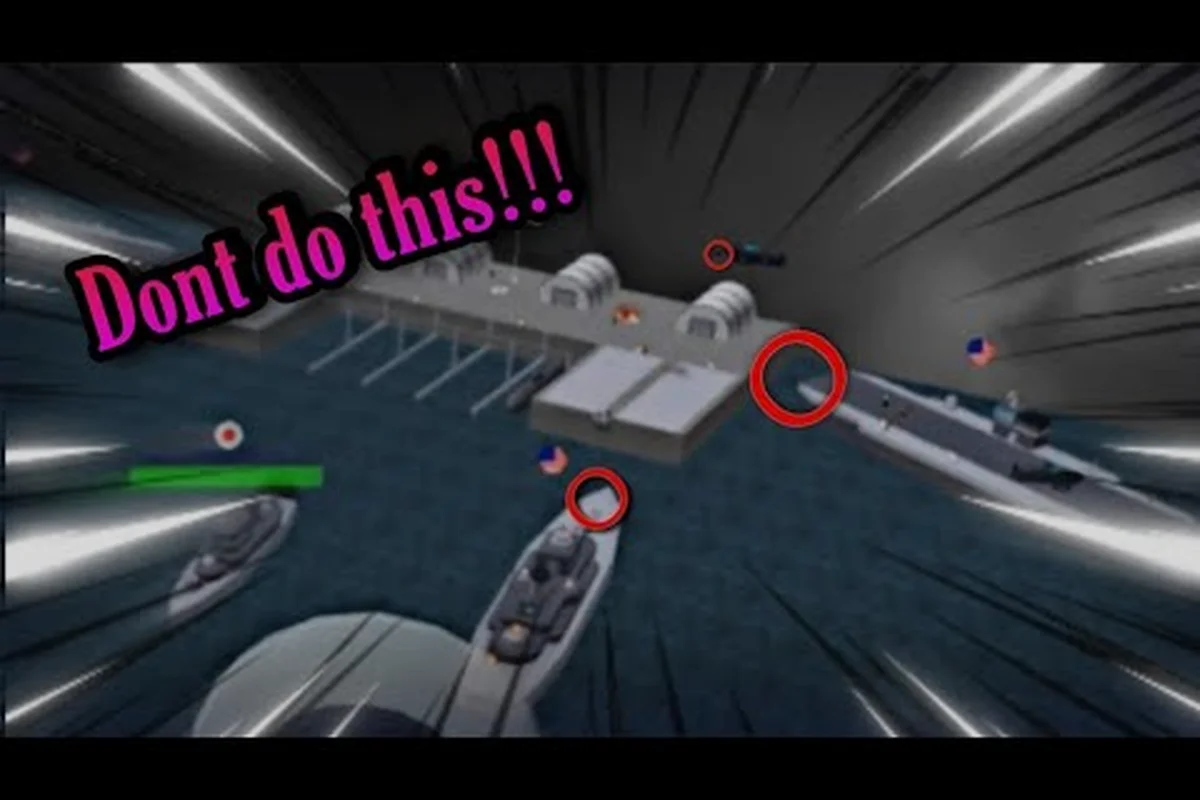
Navy War beginner mistakes to avoid are the silent resource drain that turns a fresh island base into a stalled project within the first two play sessions. The Roblox strategy title by Parabola MMOVEMENT rewards patient commanders who plan fleet composition, dock placement, and currency flow before they spend a single coin on a battleship hull. This guide breaks down where most newcomers hemorrhage resources, which upgrades pay for themselves, and how to align your early-game priorities with a Navy War resource management guide mindset from minute one.
The Five Costliest Early-Game Traps
New players in Navy War share a predictable pattern: they react to whichever enemy sails into view, build whatever ship their dock allows next, and wonder why their gold reserve vanishes before the first carrier unlocks. According to community data gathered from the Navy War game page on Roblox, the average active session burns through roughly 30–40% of a new player's starter gold on impulse purchases that never pay back. Breaking that loop starts with recognizing the traps before they trigger.
Mistake 1: Spreading Gold Across Every Ship Class
The single most common Navy War beginner mistake is treating the dock like a buffet. Players unlock Destroyers, Cruisers, and Submarines within the first hour, and they spend gold on one of each because the menu lets them. In practice, the early economy cannot sustain four parallel upgrade paths. The result is four half-built fleets that lose every PvP engagement and contribute nothing to the island's defense income.
A focused two-class build beats a scattered four-class roster every time, especially before the shipyard hits tier 3. Stick with one surface combatant and one anti-air platform, then funnel every spare coin into hull durability and fire rate.
Mistake 2: Ignoring Dock Placement and Range Coverage
Base layout is invisible until it isn't. Beginners tend to place their dock and shipyard wherever the island generation spawns them, which often leaves critical buildings outside each other's range aura. When your Factory sits one tile beyond the Shipyard boost radius, every ship you build costs 15–20% more resources. That gap compounds across dozens of builds, silently bleeding your gold pile.
Re-roll island layouts until your core buildings form a tight cluster, and always test the radius overlay before committing to a placement. Hold the placement tool and confirm that the Shipyard, Factory, and at least one Warehouse all sit inside the gold-green boost ring; a 30-second layout reset saves roughly 400 gold per ten ships built, which otherwise compounds into hours of resource catch-up.
Mistake 3: Chasing the Battleship Dream Too Early
The Aircraft Carrier and Battleship silhouettes look like the endgame, so new players pour early resources into unlocking them. But these capital ships demand a base infrastructure that takes 4–6 hours of active play to support. Skipping straight to them skips the entire economy ladder that funds the rest of your fleet. You will end up with one expensive ship that cannot refit, cannot repair cheaply, and cannot defend an island that has no defenses.
That 90-second benchmark isn't arbitrary — it lines up with the drydock build queue most players unlock around level 12, and pushing capital ships out before that window means a single unlucky torpedo run can bench your fleet for an entire match. If your dock cycles in 15 minutes, you are functionally running a one-ship navy: every loss is permanent until you personally log back in, refit, and pay the steel cost out of your resource stockpile. Veteran players treat the drydock timer as a hard gate, banking currency and queueing the next hull before the current one even leaves port so the fleet never drops below operational strength.
Currency Leaks That Drain Your Treasury
Navy War how to earn currency is the question every new commander asks, but the real question is how to stop the currency you already have from disappearing. The game's dual-currency system (gold for buildings and repairs, gems for premium unlocks) creates two separate spending pressures, and both have their own beginner traps.
| Mistake | Symptom | Resource Lost | Fix |
|---|---|---|---|
| Auto-repairing every damaged ship | Gold drops to 0 after every skirmish | 20–30% of post-battle income | Manually repair only ships above 50% HP |
| Speeding up builds with gems | Gem balance depleted in day one | 50–150 gems per push | Reserve gems for slot expansions only |
| Skipping daily login streak | Free gold and gem bonuses left on the table | 500–2,000 gold per week | Log in at the same time daily to protect the multiplier |
| Selling captured enemy wrecks | Short-term gold, long-term scrap loss | 80% of component value | Salvage instead of selling for crafting materials |
The auto-repair toggle is the single most expensive default setting in Navy War for beginners, silently siphoning 20–30% of every post-battle gold payout into the dockyard before you even see the counter update. New commanders assume the system repairs "for free," but each tick costs the same as two manual repairs would at full health, and because it triggers on any damage above 1 HP, a single torpedo scrape burns through an entire skirmish's loot. Turn it off in Settings → Fleet Management, then build a repair queue that only activates when a ship drops below 50% HP — the threshold listed in the table above — and keep a reserve of at least 2,000 gold untouched for emergency drydock pulls. Within one play session, most rookies see their treasury swing from a daily -800 gold bleed to a steady +1,200 surplus, which is the actual currency buffer you need before learning how to earn currency in Navy War at a competitive rate.
Ship Upgrade Paths That Actually Pay Off
A Navy War resource management guide is useless without specific upgrade recommendations. Not all ship stats scale equally, and not all upgrades are worth their gold cost. The table below ranks the highest-return investments for commanders who are still building their first real fleet.
| Upgrade Tier | Priority Target | ROI Reason | Avoid Until Later |
|---|---|---|---|
| 1 | Destroyer fire rate | Cheapest stat boost, doubles early-game clear speed | Carrier hangar size |
| 2 | Cruiser armor plating | Survives two extra hits in PvP, reduces repair frequency | Submarine stealth modules |
| 3 | Destroyer torpedoes | Unlocks the anti-battleship niche no other starter ship fills | Premium paint jobs |
| 4 | Cruiser secondary battery | Fills the anti-air gap before you own a carrier | Cosmetic flags |
Fire rate and armor dominate the early economy because they affect every sortie, while stealth and cosmetics affect almost none. The cost-to-benefit gap between these tiers widens fast, so locking in tier 1–2 upgrades before experimenting is the move that separates survivors from spectators.
When to Diversify Your Fleet
Diversification has a time and a place. Once your two core ship lines are at upgrade tier 3 and your base generates passive income reliably, the third ship class becomes a tactical option rather than a resource drain. At that point, picking a Submarine for recon or an Aircraft Carrier for map control makes sense because your economy can absorb the cost. Before tier 3, every diversification is a tax you cannot afford.
Group Play, Daily Rewards, and the Multiplayer Edge
Navy War how to join a group is the most overlooked progression path in the game, because the menu hides the group tab behind a base-level requirement that beginners miss. Joining an active group unlocks shared treasury access, group-only mission boards, and a 10–15% repair discount that compounds across every battle you fight. Players who skip this step effectively play the game at 85% efficiency, and they never realize it.
How to Unlock the Group Tab
The group interface unlocks once your base reaches level 3, which typically takes 2–3 hours of focused play. After that, you can browse public groups from the social menu or accept an invite link from a current member. Larger groups offer better treasury payouts but slower individual reward rates, so a mid-size active group (20–40 members) usually beats both extremes for beginners.
Daily and Weekly Reward Cycles
The reward structure layers three independent cycles: daily login bonuses, weekly mission completions, and group treasury payouts. Missing any one of them is recoverable; missing all three in a single week is a 40% income loss that no amount of post-battle looting can offset. Set a reminder for the daily reset, finish at least three weekly missions, and check the group treasury tab every Sunday to keep the cycle intact.
| Reward Cycle | Frequency | Typical Payout | Miss Penalty |
|---|---|---|---|
| Daily login | Every 24 hours | 200–500 gold + small gem | Streak multiplier reset after 2 missed days |
| Weekly missions | Resets Sunday | 1,500–3,000 gold + rare components | 1-week cooldown on missed tier |
| Group treasury | Sunday claim | Scales with group size and activity | 0 if unclaimed by Monday reset |
Base Defense and Island Layout Strategy
A solid island base does more than produce ships; it also generates passive defense income and unlocks construction tiers. Beginners tend to ignore defense turrets entirely, focusing only on the dock and shipyard, but a single well-placed turret battery pays for itself within 3–4 PvP defense events. The economy math is simple: each repelled raid deposits 400–800 gold into your treasury, and a single missed raid because you lacked turrets loses the same amount plus ship repair costs.
Defense Building Priority Order
Build turrets before you build a second shipyard, and build anti-air coverage before you build anything that flies. The priority chain below reflects what experienced players have settled on after dozens of base resets, and it exists because new commanders almost always sprint toward the second Shipyard the moment their Currency income stabilizes, leaving the Dock exposed to a single surface raid that wipes an hour of ship-building progress. Anti-air coverage has to come earlier than it feels necessary too, because carrier-based raids scale with the number of air-capable ships in the attacking fleet, not with the defender's own air force, so a player with zero planes can still lose half their base to a single enemy Carrier if no anti-air turret is online. Treat turrets as the gate, not an afterthought, and your second shipyard will actually pay for itself instead of being a free target.
-
Dock (unlocks ship production)
-
Shipyard (unlocks fleet expansion)
-
Anti-surface turret battery (protects dock from enemy ships)
-
Factory (reduces ship build cost by 15–20%)
-
Anti-air turret (protects against carrier-based raids)
-
Second shipyard (only after tier 5)
This sequence is the one piece of advice veterans give to every new recruit, and it is the one piece of advice beginners most often ignore. For a deeper walkthrough on the early base setup that feeds into this priority chain, the Navy War beginner guide covers the first-hour layout choices in detail.
Frequently Asked Questions
What is the fastest way to earn currency in Navy War as a beginner?
Focus on daily login streaks, weekly mission completions, and group treasury payouts before chasing post-battle loot. These three cycles deliver 60–70% of a beginner's total income and require zero risk. Looting enemy wrecks is a bonus, not a foundation, and players who skip the cycles burn out their reserves within a week.
Should I join a group right away or wait until my base is stronger?
Wait until your base reaches level 3, which unlocks the group tab, but join a mid-size active group the moment it appears. Holding off longer costs you weekly treasury payouts and repair discounts. Larger groups are not always better, because 20–40 active members tend to share rewards more evenly than 100+ member rosters where most players are inactive.
What is the biggest Navy War beginner mistake that wastes the most gold?
Auto-repairing every damaged ship after a sortie, because it silently drains 20–30% of post-battle income without the player noticing. Turn auto-repair off, manually repair only ships above 50% HP, and bank the difference. Within a single session the savings are visible, and across a week they fund an entire upgrade tier you would otherwise have to grind for.
Is it worth upgrading the Submarine line early?
No. Submarines shine as recon and anti-battleship specialists, but they require upgrade tier 3 infrastructure and a fleet composition that supports them. Beginners who invest in Submarines before their Destroyer and Cruiser lines are stable end up with an expensive scout that cannot survive long enough to scout. For combat fundamentals that explain why the Destroyer line pays off first, the Navy War combat basics guide lays out the engagement math in detail.